
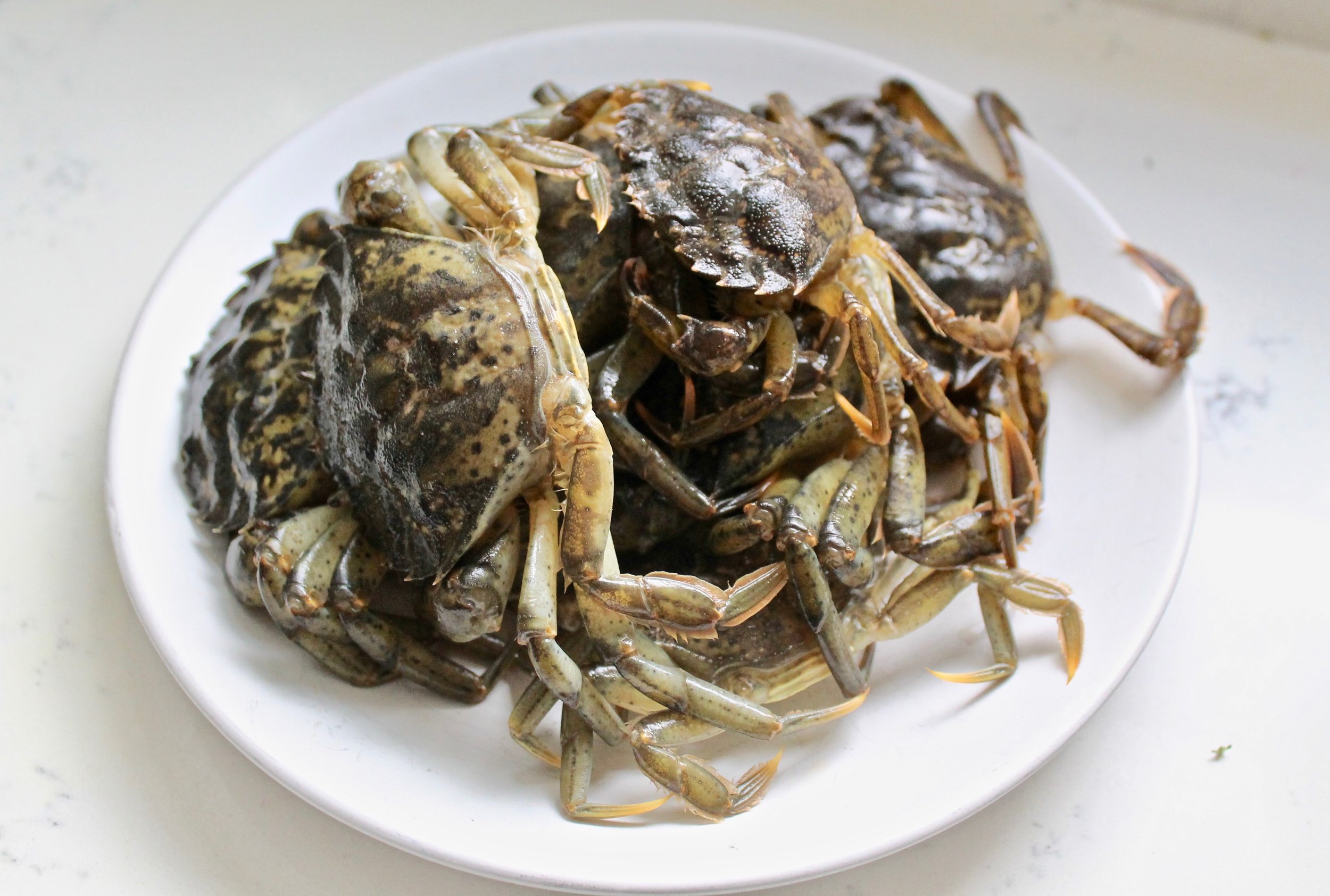
CRAB CLASS
Open to Public Schools (Middle and High School) in the Narragansett Bay Watershed
Marine Science Meets Culinary Education

Learn about invasive green crab in the classroom!
Invasive species ID & ecology
Hands-on cooking shucking and sorting demonstrations
Culinary demonstrations with local chefs (for high schools)
Up to 6 hours of programming for multiple class periods
Cafeteria staff instruction and product donation for green grab lunch specials
Coastline foraging or monitoring activities in coordination with citizen science efforts (travel costs not covered)
GreenCrab.org can also provide allergen-friendly programming for schools with contact crustacean allergies or allergen concerns. While funding doesn’t cover field trip travel costs, we’re happy to accommodate programming in the field for schools interested in structuring a field trip.
Email maryparks@greencrab.org to sign up or ask questions.
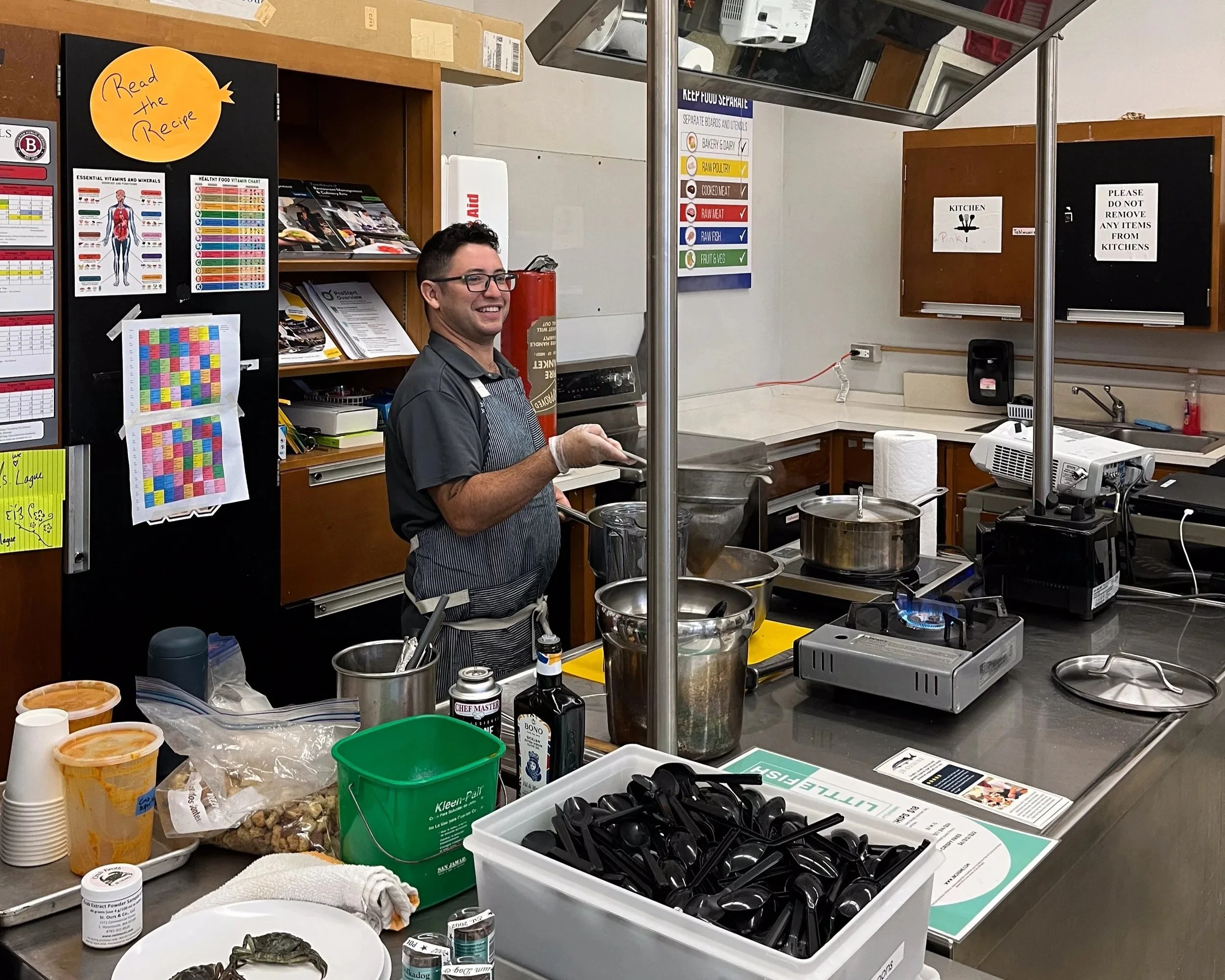
Crab Class x Brockton High School
Crab Class kicked off with Brockton High School’s Culinary Department. Josh Berman of Little Fish RI taught students how to make Green Crab Bisque with Achiote and Guajillo while sharing his culinary journey and why he focuses on underutilized seafood.
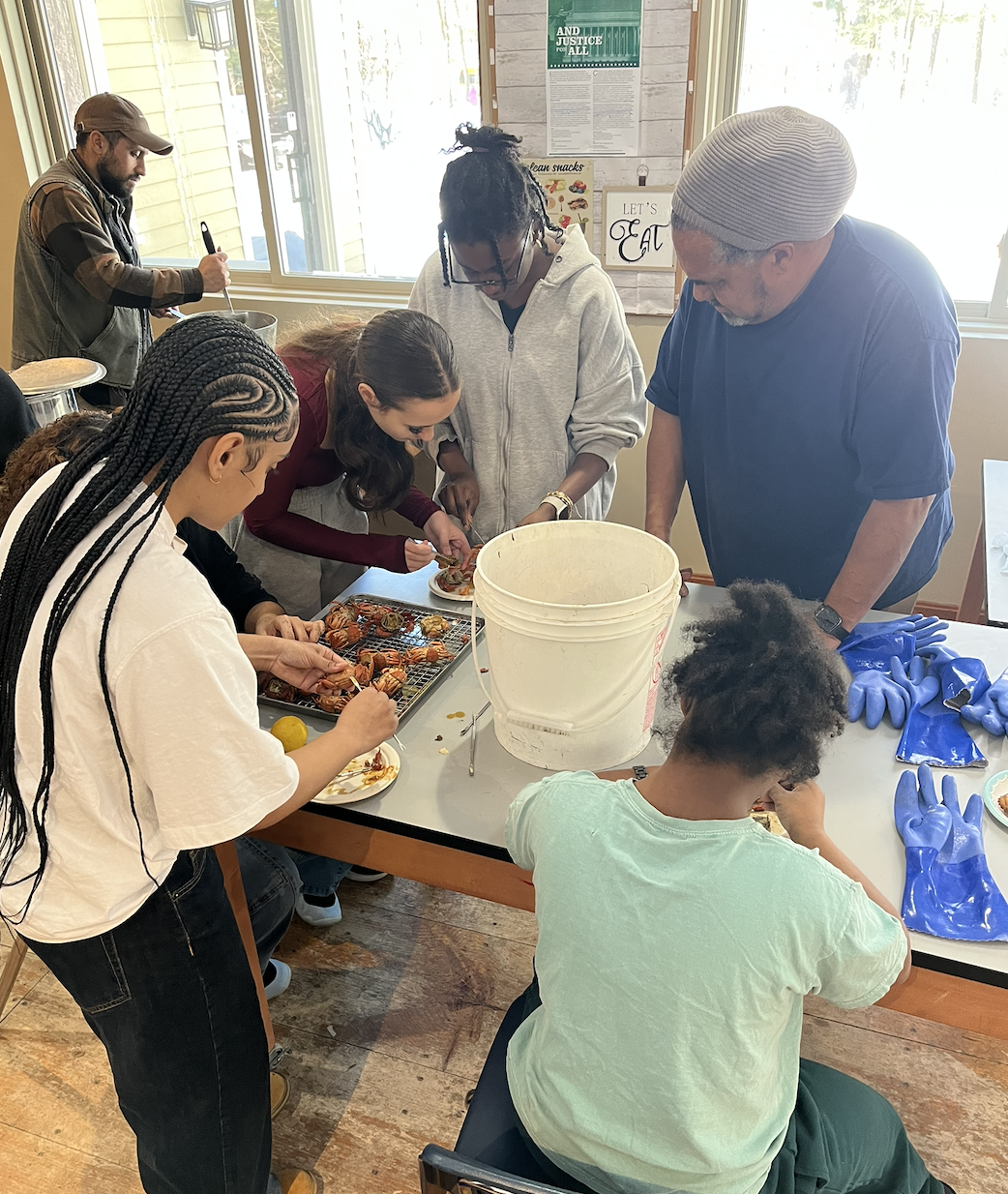
Crab Class x The Greene School
Captain Jason Jarvis and Chef Frank Salustri of Quonnie Fish Co. showed students how to shuck native species and invasive green crab. Captain Jarvis also dove into green crab’s invasive impact from a harvester’s perspective alongside Executive Director Mary Parks. To wrap up the day, Chef Salustri served a green crab bisque for lunch at the school.
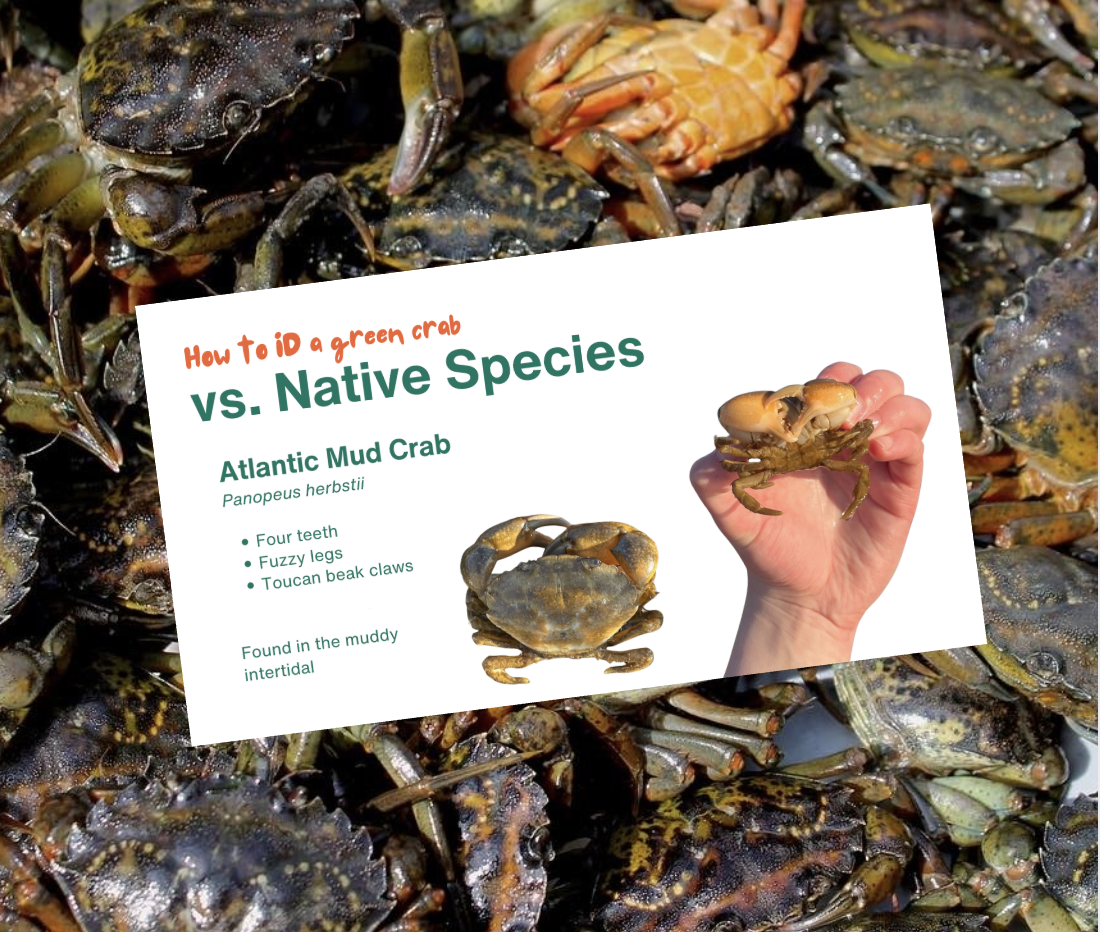
Crab Class x Nuestro Mundo
Executive Director Mary Parks explored green crab’s invasive impact on ecosystems, fisheries, and communities in the Narragansett Bay Watershed through an interactive presentation. This lesson plan also explored how chefs in Rhode Island cook with green crabs. While Mary brought some crabs in for viewing, this programming was touch-free to accommodate allergies.

Crab Class is made possible with funding from the Narragansett Bay Estuaries Program